
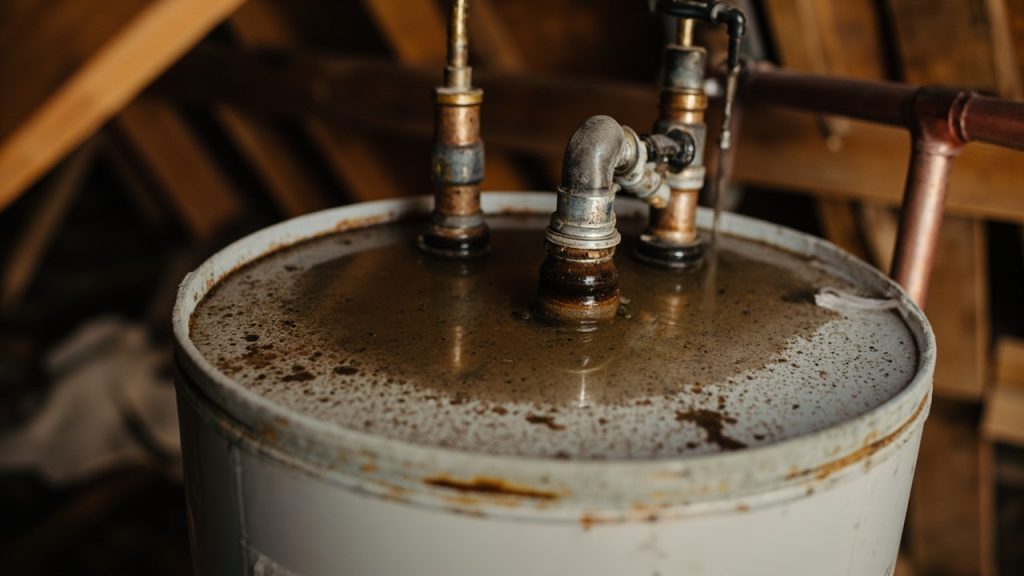
A steady drip from your ceiling in the middle of a Houston summer is rarely a mystery. If your water heater sits in the attic, that drip is a final warning before a catastrophic structural failure occurs. Most homes in areas like Sugar Land and The Heights were built with water heaters in the attic to save space on a concrete slab. While this design choice keeps the unit out of sight, it creates a massive liability for homeowners. A standard 40 gallon water heater weighs approximately 450 pounds when full. When that tank fails, the water weight combines with the weakening effect of moisture on your drywall. This combination leads to a total ceiling collapse that destroys furniture, flooring, and electronics. The current year 2026 has seen an increase in these incidents as older tanks struggle with modern water pressure demands. You should check the age of your unit if you live in a neighborhood like River Oaks or Memorial where older infrastructure is common.

If you see water stains on your ceiling, you must act immediately. Go to your breaker panel and shut off the power to the water heater if it is electric. For gas units, turn the dial on the water heater thermostat to the off position. Locating the cold water shutoff valve is the next priority. This valve is usually found on the pipe entering the top of the tank. Turning this handle clockwise will stop the flow of new water into the leaking vessel. If you cannot safely reach the attic because of a failing ceiling, shut off the main water supply to your entire home. If you are in a crisis right now, finding a 24 hour plumber in Houston who can respond in minutes is the best way to mitigate damage.
The first 30 minutes of a leak determine whether you will be replacing a small patch of drywall or your entire living room floor. Houston homeowners should follow a specific sequence to minimize the impact of an attic flood. First, shut off the energy source. This prevents the heating elements from burning out or gas from continuing to heat a dry tank. Second, close the cold water intake valve to stop the pressurized flow of water into the home. Third, drain the remaining water by attaching a garden hose to the drain valve at the bottom of the tank and running it to a nearby gutter or driveway. Fourth, clear the area below the leak and move all valuables to another room. Finally, punch a small hole in the ceiling using a screwdriver in the center of the wet spot. This allows water to drain into a bucket rather than spreading across the entire ceiling structure.
Why Houston Attics Are the Worst Environment for Water Heaters
Houston is known for extreme heat and high humidity. These factors create a punishing environment for any appliance located in an unconditioned attic space. During the peak of summer, attic temperatures in the 610 loop can reach 140 degrees Fahrenheit. This ambient heat causes the metal of the water heater tank to expand and contract more aggressively than a unit kept in a garage or indoor closet. Over time, this thermal stress weakens the glass lining of the tank, leading to internal corrosion and eventual rupture. This is a common issue in suburbs like Katy and Pearland where new construction often places systems in tight, unventilated attic corners.
Humidity also plays a major role in the degradation of your plumbing system. The moisture in the air can cause the external shell of the tank to rust. It can also lead to the premature failure of the Temperature and Pressure Relief valve, often called the T and P valve. This valve is a safety feature that releases water if the pressure inside the tank gets too high. In a humid attic, these valves can become encrusted with mineral deposits or rust. This causes them to stick shut or leak continuously into the emergency drain pan. If the valve sticks shut during a pressure spike, the tank itself could burst. Homeowners should refer to the International Code Council for the latest 2026 safety standards regarding relief valve discharge.
Managing hard water in Sugar Land is another local challenge. The high mineral content in the water supply leads to sediment buildup at the bottom of the tank. This sediment acts as an insulator, forcing the bottom burner or element to work harder to heat the water. In an already hot attic, this extra heat further stresses the tank and increases the risk of a rupture. Current 2026 plumbing standards suggest that homeowners in the Greater Houston area should consider high-efficiency filtration to mitigate this specific risk. Sediment also clogs the drain valve, making it impossible to empty the tank during an emergency.
The Structural Threat of Water Weight and Drywall Saturation
Drywall is not designed to hold weight. It is a porous material made of gypsum and paper. When it becomes wet, it loses almost all its structural integrity. A slow leak from a water heater might saturate a large area of the ceiling before you ever notice a drip. Once the drywall is soft, the weight of the water pooling on top of it will eventually cause a large section to pull away from the ceiling joists. This usually happens without warning and can lead to thousands of dollars in restoration costs. Understanding the physical load on your ceiling is the first step in prevention.
| Component | Approximate Weight | Impact on Ceiling |
|---|---|---|
| 40 Gallon Tank Full | 450 Pounds | Concentrated load on joists |
| Saturated 4×8 Drywall Sheet | 150 Pounds | Loss of screw hold and sagging |
| Wet Insulation Cellulose | 200 Pounds | Pushes drywall downward |
| Accumulated Water Pool | 100 Pounds | Triggers immediate collapse |
The total weight pressing down on your ceiling during a major leak can exceed 800 pounds. Most residential ceiling joists are not reinforced to handle this type of load once the drywall starts to fail. If you notice your ceiling bowing or sagging, leave the room immediately. The risk of injury from falling debris and hundreds of gallons of water is significant. Many homes in Pearland and Friendswood use specific engineered trusses that can also be compromised if moisture sits on the bottom chords for extended periods. This moisture leads to wood rot, which weakens the entire roof structure over time.
Safety Features and 2026 International Plumbing Code Updates
The 2026 International Plumbing Code has introduced stricter requirements for attic installations to prevent property damage. A primary change involves the technical specifications for the emergency drain pan. Current codes require the pan to be at least 2 inches deep and constructed of corrosion-resistant material. The drain line connected to this pan must be at least 1 inch in diameter, which is an increase from older standards that often used three-quarter inch lines. This larger diameter is necessary to handle the volume of a catastrophic tank failure rather than just a slow drip. You can read more about these requirements on the Houston Permitting Center website.

Another major 2026 update involves the termination point of the drain line. The code now mandates that the pan drain line must discharge to an observable point. In Houston, this usually means the pipe must exit the soffit above a window or door where the homeowner can see the water. If you see water dripping from a pipe in your eaves, your primary tank has failed and the pan is doing its job. Additionally, 2026 standards require a water-level detection device, often called a float switch, to be installed in the pan. This device must be wired to automatically shut off the water supply or the power to the water heater when water is detected.
Thermal expansion tanks are also a critical requirement under the current 2026 code for any closed-loop plumbing system. When water heats up, it expands. Without an expansion tank, this pressure has nowhere to go but against the walls of your water heater. This repeated stress is a leading cause of premature tank failure in the Houston metro area. Ensuring your attic installation includes a properly sized expansion tank is the best way to extend the life of your unit and protect your ceiling. If your current unit lacks an expansion tank, you should consult a water heater specialist to have one integrated.
Insurance Coverage Implications for Houston Homeowners in 2026
Insurance companies in Houston have become much more rigorous regarding attic water heaters in 2026. Many carriers now classify an attic water heater older than 10 years as a high-risk liability. If a tank fails and causes a ceiling collapse, the claims process involves a detailed inspection of the maintenance history. If the insurer finds that the T and P valve was neglected or that the drain pan was improperly installed, they may deny a portion of the claim based on homeowner negligence. This is a significant shift in how policy providers handle water damage in Harris County.
Subrogation is another factor that has changed in 2026. If a professional plumber installed your unit but failed to meet the 2026 International Plumbing Code requirements, your insurance company might pay for the damage but then sue the plumbing contractor to recover the costs. This highlights the importance of using licensed professionals who understand the specific requirements for Harris County and surrounding municipalities. Some Houston insurers are now offering discounts for homeowners who relocate their water heaters to the garage or install a whole-home leak detection system. These proactive measures can reduce your annual premiums significantly.
It is also important to understand the difference between sudden and accidental damage versus seepage. A catastrophic tank burst is usually covered. However, if a slow leak has been occurring for months and you ignored the signs, the resulting mold remediation might not be covered. Houston homeowners should review their policies to see if they have specific riders for water backup and sump pump failure, as these often apply to attic drain line issues as well. In 2026, many policies have specific limits on mold coverage, making it even more vital to prevent the leak before it starts. Early detection is your best defense against high out of pocket costs.
Smart Home Integration and Leak Detection Technology
Modern technology offers a level of protection that was not available in previous years. In 2026, smart leak detection systems have become a standard recommendation for any Houston home with an attic water heater. These systems connect directly to your municipal water meter or your main supply line. Brands like Phyn Plus and Moen Flo are particularly popular in the Houston market because they are compatible with the Advanced Metering Infrastructure used by many local water departments. These devices provide real-time data to your smartphone and can stop a flood even if you are on vacation.
These devices use ultrasonic waves or pressure sensors to monitor the flow of water through your pipes. They can detect a leak as small as a single drip per minute. If the system detects an unusual flow pattern, such as a water heater tank rupture, it will instantly close a motorized ball valve on your main line. This stops the flood in seconds. Other brands offer a non-invasive option that straps onto your existing water meter and sends alerts if it detects continuous flow. This is particularly useful for residents in older neighborhoods like West University where updating the main line is difficult.
For specific attic protection, homeowners can use localized sensors like the Resideo WiFi Leak Detector or the Govee smart water sensors. These small discs sit inside the emergency drain pan. The moment they get wet, they trigger an audible alarm and send a push notification to your phone. When integrated with a smart home hub, these sensors can also turn off your HVAC system to prevent moisture from being pulled into your air ducts, which is a common problem during attic floods in humid environments like Memorial or West University. This layered approach to detection is the new standard for luxury homes in the region.
The Benefits of Moving Your Water Heater Out of the Attic
Many homeowners are choosing to relocate their water heaters during a replacement. Moving the unit to a garage or an exterior closet eliminates the risk of a ceiling collapse. It also makes maintenance much easier. A plumber is more likely to perform a thorough inspection and flush the tank if they do not have to crawl through a 140 degree attic space. For those in Memorial or older parts of the city, this move often happens during a larger project like whole home repiping to ensure the entire system is modern and safe.
If relocation is not possible, switching to tankless water heaters in Katy is a smart alternative. A tankless unit is mounted to the wall and does not store 40 or 50 gallons of water. While it can still leak, the volume of water available to cause a ceiling collapse is significantly lower. Tankless units also have internal sensors that can shut down the system the moment a leak is detected inside the cabinet. This provides a level of security that a traditional tank cannot match. You should research the benefits of tankless water heaters to see if they fit your energy goals in 2026.
Maintenance Checklist for Attic Water Heaters in 2026
Preventive maintenance is the only way to ensure your attic unit reaches its full life expectancy. Houston plumbers recommend a professional inspection at least once per year to check for the following items. Keeping a log of these services is essential for insurance purposes if you ever need to file a claim in the future.
| Maintenance Task | Frequency | Purpose |
|---|---|---|
| Flush the Tank | Every 12 Months | Removes sediment and prevents overheating |
| Inspect Anode Rod | Every 2 to 3 Years | Prevents the tank from rusting internally |
| Check Pan Drain Line | Every 6 Months | Ensures water can escape during a leak |
| Test T and P Valve | Every 12 Months | Ensures the tank will not over pressurize |
| Inspect Flex Lines | Every 12 Months | Checks for corrosion at connection points |
The sacrificial anode rod is the most important part of your tank that you never see. It is a rod made of magnesium or aluminum that attracts corrosive elements in the water. These elements eat the rod instead of the steel tank. In Houston, these rods often vanish within three years because of the local water chemistry. Once the rod is gone, the tank begins to rust immediately. Replacing this rod is a cheap way to double the life of your water heater and prevent a sudden rupture. If you notice a rotten egg smell in your hot water, your anode rod has likely failed.
Frequently Asked Questions About Water Heater Relocation
Moving a water heater is a significant home improvement project. Many Houston homeowners have questions about the feasibility and cost factors involved in this transition during the 2026 season. Here are the most common concerns addressed by local experts.
- What factors influence the cost of relocating a water heater to the garage? The primary factors include the distance from the current gas and water lines to the new location. Running new plumbing through walls and potentially cutting into a concrete slab to reach a drain will increase the complexity of the project. Gas line sizing also plays a role, as a longer run might require a larger pipe diameter to maintain proper pressure.
- Is a tankless conversion more expensive than a standard relocation? A tankless conversion often requires upgrades to your electrical system or your gas meter capacity. However, because tankless units are smaller and wall-mounted, they offer more flexibility in where they can be placed. This can sometimes reduce the cost of structural modifications compared to moving a heavy traditional tank.
- Can I move my water heater to an outdoor closet? Yes, this is a popular option in Houston. These closets must be properly insulated and vented to meet 2026 codes. This setup frees up space inside the home and completely removes the risk of water damage to the interior structure.
- How long does a relocation project take? Most professional crews can complete a relocation in one to two days. This includes the time needed to run new lines, install the new unit, and properly cap off the old plumbing in the attic.
Recognizing the Signs of an Impending Tank Failure
You do not have to wait for a flood to know your water heater is dying. There are several audible and visual cues that suggest a replacement is necessary. If you hear a popping or rumbling sound coming from your attic when the water is heating, that is the sound of steam bubbles rising through a thick layer of sediment. This indicates the bottom of your tank is overheating and becoming brittle. This is a common issue for residents in neighborhoods with older infrastructure where sediment levels are higher. You should act quickly when these sounds begin to avoid a sudden burst.
Rusty water from your hot water taps is another clear sign. This means the internal glass lining of the tank has cracked and the steel shell is oxidizing. If the rust is only present when you first turn on the water, it might be the pipes. If it continues throughout the shower, it is the tank. Homeowners in older neighborhoods should also watch for sewer issues in The Heights which can sometimes coincide with general plumbing degradation in the home. A sudden drop in hot water volume or temperature also indicates that the dip tube has broken off inside the tank, which often happens as the unit nears the end of its life.
Protecting Your Houston Home from Future Plumbing Emergencies
Living with a water heater in the attic requires a proactive approach to home maintenance. The current year 2026 brings better technology for leak detection than ever before. Smart leak detectors can now be placed in the drain pan and connected to your home Wi-Fi. These devices will send an alert to your phone the second they detect moisture. Some advanced models can even be paired with an automatic shutoff valve on your main water line to stop the flow of water before you even get the notification. This is the most effective way to prevent a ceiling collapse while you are away from home.
If your water heater is more than eight years old and located in the attic, you are in the high risk zone for a failure. The cost of a proactive replacement is a fraction of the cost of a full restoration project involving water damage experts, mold remediation, and structural repairs. Schedule an inspection with a licensed Houston plumber to evaluate the condition of your tank and the integrity of your emergency drain system. Taking action today prevents your home from becoming another statistic in the long history of Houston attic floods. Contact a local professional to discuss the best relocation or upgrade options for your specific property and ensure your peace of mind throughout the 2026 season. You can start by checking our plumbing maintenance guide for more tips on home safety.