menu

Mold in Bathroom Cabinets in Houston – Expert Diagnosis and Permanent Plumbing Fixes

Stop the spread before it ruins your vanity or makes you sick. Our licensed plumbers locate hidden leaks and moisture sources causing mold in bathroom cabinets, then eliminate the problem at the source with surgical precision plumbing repairs.

Slider Image 1
Slider Image 2
Slider Image 3
Slider Image 4
Slider Image 5
Slider Image 7
Slider Image 8
Slider Image 9
Slider Image 10
Slider Image 11

Why Houston Bathrooms Breed Hidden Mold Inside Cabinets

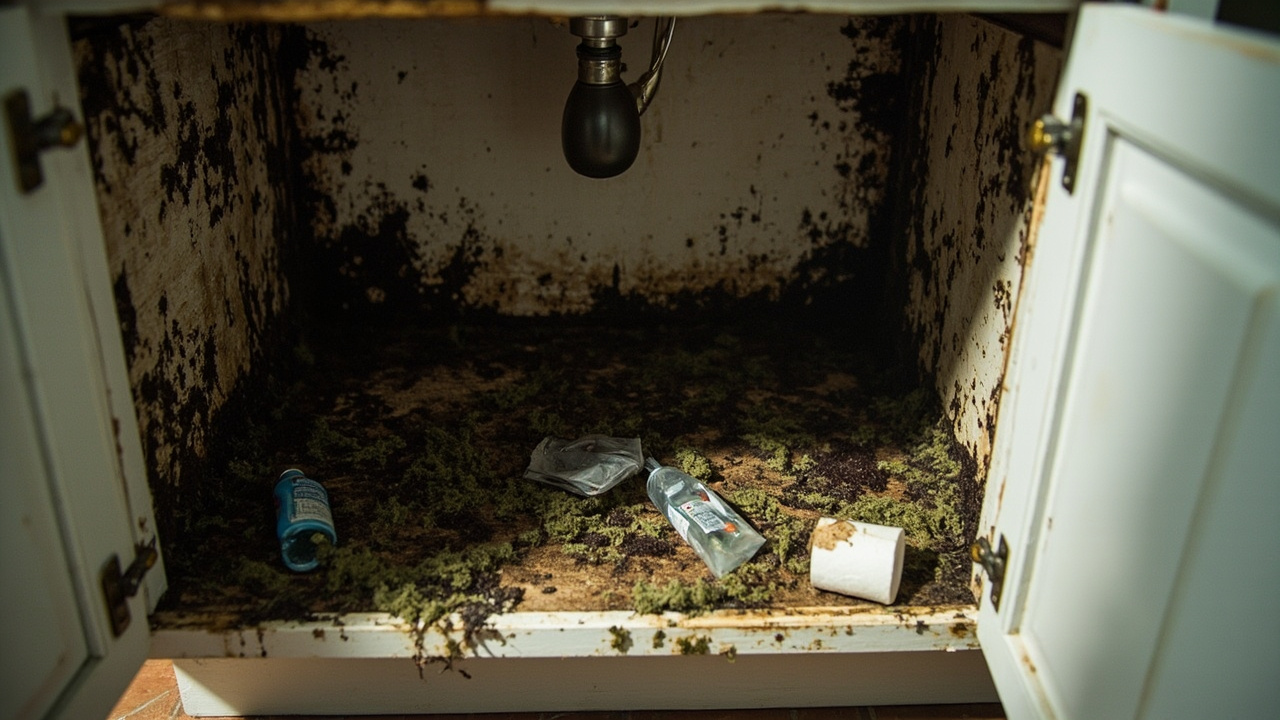
You open the cabinet under your bathroom sink and smell it before you see it. That earthy, musty odor hits you first. Then you spot the black spots creeping up the pressboard backing or fuzzy white patches spreading across the cabinet floor. Houston's year-round humidity creates the perfect breeding ground for bathroom vanity mold, but humidity alone does not explain why mold grows inside your cabinets while the rest of your bathroom stays clean.

The real culprit is almost always a slow plumbing leak you cannot see. A dripping P-trap gasket. A loose slip nut connection. A sweating supply line that condenses in Houston's muggy air. These microscopic water sources saturate the dark, enclosed space inside your bathroom cupboard, creating ideal conditions for mold growth inside vanity structures. The mold feeds on the organic materials in your cabinet, like particleboard, MDF backing, or even the cardboard shelf liner you installed years ago.

Mildew in bathroom cabinets starts as a surface nuisance but quickly penetrates porous materials. Once mold under bathroom sink areas colonizes the wood or pressboard, surface cleaning becomes pointless. You wipe it away, and it returns within days because the moisture source still feeds it. Houston homeowners in older neighborhoods like Montrose or The Heights often discover extensive bathroom cupboard mold damage during renovation projects, finding rotted cabinet floors and black stains that have spread to the drywall behind the vanity.

The health risk escalates when mold spores become airborne every time you open the cabinet door. Respiratory irritation, allergic reactions, and persistent sinus issues can all trace back to hidden mold colonies thriving in the dark cavity beneath your sink.

Why Houston Bathrooms Breed Hidden Mold Inside Cabinets
The Forensic Plumbing Approach to Eliminating Cabinet Mold

The Forensic Plumbing Approach to Eliminating Cabinet Mold

You cannot kill mold permanently without eliminating the water source. Surface treatments with bleach or antimicrobial spray provide temporary cosmetic relief but fail to address the underlying plumbing failure feeding the colony. Atlas Plumbing Houston treats bathroom vanity mold as a plumbing diagnostic problem first and a cleaning problem second.

We start with moisture mapping using infrared thermal imaging to identify temperature differentials that indicate active water infiltration. A properly functioning drain system and supply line assembly should show consistent thermal signatures. Cold spots indicate condensation issues. Warm spots near drain lines can reveal slow leaks that evaporate during the day but saturate materials overnight.

Next, we perform a pressure test on the drain assembly. We seal the drain opening and introduce air pressure to the P-trap and tailpiece connections. Even a one-PSI pressure drop over five minutes confirms a leak at the slip nut, gasket, or trap threads. Many Houston homes built before 1990 still have original chrome P-traps with deteriorated rubber gaskets that leak just enough to feed mold growth inside vanity cabinets without ever creating visible puddles.

Supply line inspection focuses on compression fittings at shut-off valves and braided flex line connections. We check for calcium deposits or corrosion that indicate weeping connections. In Houston's hard water environment, mineral buildup can prevent shut-off valves from sealing completely, creating a perpetual moisture source.

We also evaluate ventilation issues that trap humidity. Bathrooms without exhaust fans or with improperly vented fans dump moisture into the cabinet cavity through gaps in the countertop or sink rim. The combination of poor air circulation and plumbing leaks accelerates mildew in bathroom cabinets exponentially.

What Happens When You Call Us About Cabinet Mold

Mold in Bathroom Cabinets in Houston – Expert Diagnosis and Permanent Plumbing Fixes
01

Leak Detection Inspection

We arrive with thermal imaging equipment and pressure testing tools to pinpoint the exact moisture source. You get a written diagnostic report identifying every plumbing defect contributing to the mold problem. We document leak locations with photos and explain which components have failed. This forensic approach eliminates guesswork and prevents unnecessary repairs to plumbing that still functions correctly.
02

Surgical Plumbing Repair

We replace failed components using corrosion-resistant materials designed for Houston's water chemistry. New P-trap assemblies with reinforced gaskets, braided stainless supply lines with double-crimped fittings, and properly seated shut-off valves eliminate the water source feeding your bathroom cupboard mold. We verify repairs with another pressure test before closing access. You see the pressure gauge hold steady, confirming zero leakage.
03

Prevention Strategy Guidance

We walk you through cabinet ventilation improvements and humidity control strategies specific to your bathroom layout. You learn which materials resist mold growth inside vanity structures if you decide to replace damaged cabinetry. We explain maintenance intervals for checking connections and when to call us for follow-up inspections. Our goal is to keep you mold-free long-term, not just fix today's problem.

Why Houston Homeowners Trust Local Plumbers for Hidden Mold Issues

Generic mold remediation companies treat the symptom. They scrub the visible mold, spray antimicrobial coatings, and leave without fixing the plumbing failure that caused it. Within weeks, you see new growth because the leak still saturates your cabinet. You pay twice, first for remediation that fails and then for the plumbing repair you needed from the beginning.

Atlas Plumbing Houston eliminates mold under bathroom sink areas by addressing the root cause. We understand how Houston's climate and water conditions create unique challenges. Our Gulf Coast humidity means condensation forms on cold water supply lines even when connections do not leak. Homes near the Ship Channel or Galveston Bay face even higher moisture loads. We account for these factors when diagnosing your specific situation.

Our familiarity with Houston's housing stock gives us an edge. We know that homes in Bellaire and West University often have cast iron drain stacks that corrode from the inside, causing slow leaks into wall cavities that feed mold growth inside vanity cabinets. We recognize that 1970s-era homes in Clear Lake and Friendswood frequently have galvanized supply lines that corrode at connection points, creating pinhole leaks that drip just enough to sustain mildew in bathroom cabinets without obvious water damage.

We also understand local building practices. Houston's expansive clay soils shift foundations, which can torque drain pipes and break seals at P-trap connections. A plumber unfamiliar with foundation movement might replace a gasket without addressing the misaligned drain assembly, leading to repeat failures. We check for structural issues that contribute to plumbing stress and recommend solutions that account for ongoing soil movement.

You get honest assessments. If your cabinet mold stems from a simple gasket replacement, we tell you. If it requires rerouting a drain line or upgrading ventilation, we explain why and show you the evidence.

What to Expect When We Fix Your Mold Problem

Response Time and Scheduling

We offer same-day and next-day inspection appointments for bathroom vanity mold issues because we know the health risks escalate with time. You call in the morning, and we often arrive that afternoon to start diagnostics. Our inspection takes 45 to 90 minutes depending on bathroom size and plumbing complexity. You receive a written estimate before any repair work begins, with clear explanations of what each line item addresses. We respect your schedule and arrive within the confirmed appointment window, not a vague four-hour range.

Diagnostic Process Transparency

We show you exactly what we find. You see the thermal imaging screen displaying temperature anomalies. You watch the pressure gauge drop during leak testing. You examine photos of corroded fittings and deteriorated gaskets. This transparency eliminates doubt about whether repairs are necessary. Many Houston homeowners tell us they appreciate seeing the evidence because previous contractors made recommendations without showing proof. We believe informed customers make better decisions, so we invest time in education during every diagnostic visit.

Quality of Repair Work

We use commercial-grade components that exceed residential code requirements. Your new P-trap assembly includes heavy-wall ABS or PVC with reinforced compression gaskets. Supply lines are braided stainless with double-crimped ferrules, not the economy flex lines sold at big-box stores. Shut-off valves are quarter-turn ball valves with ceramic seats, not compression-style valves that fail after a few years. We verify every connection with pressure testing and water flow checks. You get repairs that stop bathroom cupboard mold permanently, not temporary fixes that fail again next year.

Post-Repair Guidance

We provide written maintenance recommendations specific to your plumbing configuration. You learn how often to inspect connections, what signs indicate developing problems, and when to schedule preventive maintenance. If your bathroom lacks proper ventilation, we explain upgrade options and connect you with qualified contractors if the work falls outside plumbing scope. We follow up 30 days after repair to confirm you remain mold-free. If any issue develops related to our work, we return promptly to address it. Our goal is long-term customer relationships, not one-time transactions.

Frequently Asked Questions

You Have Questions,
We Have Answers

How do you get rid of mold in bathroom cabinets? +

Remove mold by first fixing the moisture source. Mix one part bleach to ten parts water or use white vinegar for natural removal. Wear gloves and a mask. Scrub affected surfaces with a stiff brush, then dry completely. In Houston's high humidity, you must address underlying plumbing leaks or poor ventilation. Check under sinks for dripping pipes or failed caulking around fixtures. Remove and replace any water-damaged particleboard or MDF backing. Run exhaust fans during and after showers. For extensive mold, call a professional. Mold returns without fixing the root cause.

Why is mold growing in my bathroom vanity? +

Mold grows in bathroom vanities because of moisture trapped in enclosed spaces. Common causes include leaking supply lines, failed wax rings on toilets, dripping P-traps, or condensation from Houston's humid air. Water collects on cabinet floors from splashing or cleaning. Poor ventilation inside cabinets prevents drying. Check under your sink for standing water or water stains. Inspect all connections and shut-off valves. Houston's clay soil shifts foundations, which cracks drain lines and creates slow leaks. Touch cabinet bottoms for dampness. Fix leaks immediately and improve airflow by leaving doors open periodically.

Can moldy cabinets be saved? +

Moldy cabinets can be saved if the structural wood remains solid. Surface mold on painted or sealed wood cleans off with bleach solution or antimicrobial cleaners. Press a screwdriver into the wood. If it punches through easily, the material is compromised and needs replacement. Particleboard and MDF absorb water and crumble when moldy. Solid wood cabinets tolerate cleaning better. In Houston's humidity, dry cabinets thoroughly after cleaning using fans or dehumidifiers. Sand and repaint or reseal cleaned surfaces. Replace any swollen, warped, or soft sections. Cabinets with black mold penetration deeper than surface level require professional assessment.

Will mold go away if it dries out? +

No. Mold goes dormant when it dries but does not die. Spores remain on surfaces and reactivate with moisture exposure. Dried mold is fragile and releases airborne spores easily when disturbed. You must physically remove mold and treat surfaces with antimicrobial solutions. In Houston, dried mold can reactivate quickly because humidity returns after air conditioning cycles off or during seasonal weather changes. Dormant spores still cause allergic reactions and respiratory issues. Clean and kill mold completely. Then fix ventilation and moisture problems to prevent return. Drying alone never solves mold problems.

What are the 10 warning signs of mold toxicity? +

Ten warning signs of mold toxicity include persistent fatigue, brain fog, memory problems, headaches, respiratory issues like coughing or wheezing, sinus congestion, skin rashes, joint pain, digestive problems, and increased sensitivity to light or sound. People in Houston homes with bathroom mold often experience worsening allergies or asthma. Symptoms improve when you leave the house and return after re-exposure. Children and elderly residents show symptoms faster. Not everyone reacts to mold exposure the same way. If you suspect mold toxicity, see a doctor and inspect your home for hidden moisture problems and mold growth.

What kills mold permanently? +

Nothing kills mold permanently on porous surfaces because spores penetrate deep into materials. For non-porous surfaces like tile or sealed wood, bleach solution, hydrogen peroxide, or antimicrobial cleaners kill surface mold. Porous materials like drywall, particleboard, or fabric require removal and replacement. Killing mold means nothing without eliminating moisture. In Houston's climate, bathrooms need proper exhaust ventilation and leak-free plumbing. Encapsulants seal treated surfaces but do not fix underlying water problems. Professional remediation uses HEPA vacuums, antimicrobial treatments, and moisture barriers. Permanent mold prevention requires permanent moisture control.

Does black mold always mean water damage? +

Black mold usually indicates water damage but can grow from chronic high humidity without leaks. Bathrooms in Houston provide ideal conditions because of moisture from showers and poor ventilation. Black mold needs sustained moisture, not just brief condensation. Check for hidden leaks behind walls, under flooring, or inside cabinets. Water damage leaves stains, warping, soft spots, or peeling paint. Black mold on grout or caulk may result from inadequate drying after showers. Mold on cabinet interiors almost always means a leak. Inspect thoroughly before assuming the source. Professional moisture meters detect hidden water.

How do Japanese bathrooms not get mold? +

Japanese bathrooms resist mold through design features uncommon in Houston homes. They use waterproof rooms with floor drains, sealed surfaces, and dedicated drying ventilation. Quick-dry materials like tile and stainless steel dominate instead of porous wood or drywall. Bathrooms separate wet and dry zones with enclosed shower rooms. High-powered exhaust fans run continuously. They minimize grout lines and use antimicrobial coatings. Japanese climates vary, but humid regions rely on aggressive ventilation and heating to dry bathrooms completely after use. American bathrooms trap moisture in cabinets and behind fixtures. Better ventilation and waterproofing prevent mold.

What is better for mold dehumidifier or air purifier? +

Dehumidifiers work better for mold prevention because they remove moisture from air, eliminating the condition mold needs to grow. Air purifiers capture airborne spores but do not stop mold growth on surfaces. In Houston bathrooms, high humidity feeds mold inside cabinets and behind walls. A dehumidifier set to 50 percent relative humidity or lower prevents mold. Use dehumidifiers in enclosed spaces or whole-home units for comprehensive control. Air purifiers help people with mold allergies by reducing spore exposure but do not fix the problem. Combine both for best results, but prioritize moisture removal first.

Can you just wipe off black mold? +

You can wipe off surface mold on non-porous materials like tile or sealed countertops, but wiping does not kill spores. Use antimicrobial cleaner or bleach solution after wiping to kill remaining spores. Black mold on porous surfaces like wood, drywall, or grout penetrates deeper than surface wiping reaches. Wiping spreads spores into the air without proper containment. Wear a mask and gloves. In Houston's humid climate, mold returns quickly without treating the cause. For mold on cabinet interiors or under sinks, you must fix leaks and treat wood properly. Extensive black mold requires professional remediation.

How Houston's Humidity and Hard Water Accelerate Bathroom Cabinet Mold

Houston's average relative humidity hovers near 75 percent year-round, creating an environment where even minor plumbing leaks cause rapid mold colonization. A slow drip that might take months to cause visible damage in arid climates like Phoenix will produce extensive mildew in bathroom cabinets within weeks here. Our proximity to the Gulf of Mexico and the ship channel means coastal neighborhoods in Pasadena, League City, and Kemah face even higher moisture loads. Combine that humidity with Houston's hard water, which leaves mineral deposits that corrode rubber gaskets and create rough surfaces where mold spores anchor, and you have ideal conditions for bathroom vanity mold that resists surface cleaning.

Atlas Plumbing Houston has served the greater Houston metro for years, building relationships with homeowners who value honest diagnostics over upselling. We understand the unique challenges Houston's climate and infrastructure create for residential plumbing systems. Our technicians receive ongoing training in moisture intrusion diagnosis and mold-prevention plumbing strategies specific to Gulf Coast conditions. We maintain relationships with local mold remediation specialists, foundation repair experts, and HVAC contractors so we can coordinate comprehensive solutions when your mold growth inside vanity cabinets stems from multiple building system failures. You get a trusted local resource who knows your home's challenges.

Plumbing Services in The Houston Area

Explore our service area and locate Atlas Plumbing with ease. We’re proudly based in Houston and serve surrounding neighborhoods with fast, local plumbing solutions. Whether you need emergency assistance or routine service, we’re just around the corner. Use the map below to check our coverage area or stop by our office for in-person assistance. Our friendly team is ready to help and answer any questions you may have. Experience prompt, professional plumbing service close to home—reach out or visit today!

Address:
Atlas Plumbing Houston, 2200 Post Oak Blvd, Houston, TX, 77056

Additional Services We Offer

Our news updates

Latest Articles & News from The Blogs

Choosing the Right Professional for Safe Gas Line Repairs Around Pearland Gas leaks in Pearland require fast action and expert…

Who You Should Call for Safe Gas Line Repairs Around Pearland

Choosing the Right Professional for Safe Gas Line Repairs Around Pearland Gas leaks in Pearland require fast action and expert…

Professional Drain Cleaning in Cypress That Clears the Clog for Good

Cypress homeowners often struggle with drains that refuse to stay clear. When you live in neighborhoods like Bridgeland or Fairfield,…

Why Tech Forward Homeowners in Memorial are Swapping to Touchless Kitchen Faucets

Smart Kitchen Upgrades in Memorial Homes for 2026Homeowners in the Memorial area are leading the shift toward smarter more efficient…

Contact Us

Call Atlas Plumbing Houston at (281) 572-0070 right now for same-day mold diagnostics. We pinpoint the leak feeding your cabinet mold and fix it permanently with precision plumbing repairs. No guesswork, no temporary fixes, just results.