menu

How to Shut Off Main Water Valve in Houston – Emergency Preparation Guide for Homeowners

Learn the exact location and proper technique to close your main water shut off valve during plumbing emergencies, freezes, and hurricanes common to the Houston metro area.

Slider Image 1
Slider Image 2
Slider Image 3
Slider Image 4
Slider Image 5
Slider Image 7
Slider Image 8
Slider Image 9
Slider Image 10
Slider Image 11

Why Every Houston Homeowner Must Know Their Main Water Shutoff Location

When a pipe bursts at 2 AM or a washing machine hose ruptures while you are at work, every second counts. Water flowing at 60 PSI through a compromised line dumps hundreds of gallons per hour into your home. Floors buckle. Drywall crumbles. Mold begins colonizing within 48 hours.

Houston homeowners face unique water emergency risks. Our clay soil shifts seasonally, creating stress fractures in underground supply lines. Hurricane season brings flooding that can backflow through fixtures. Winter freezes, while rare, catch residents unprepared because most homes lack proper pipe insulation in attics and crawl spaces. When temperatures drop unexpectedly, exposed copper lines split open.

The difference between minor damage and catastrophic loss often comes down to one skill. You need to know how to turn off main water supply to your home immediately. Not after you call a plumber. Not after you search YouTube tutorials. Right now.

Most homeowners have never located their main shutoff valve. Many confuse fixture shutoffs, the small valves under sinks and toilets, with the house water main. Those individual valves stop flow to one fixture. The main valve controls the entire water supply to your home.

Turning off house water main stops all water flow from the city supply or well. This single action prevents thousands of dollars in water damage while you wait for professional repairs. The valve location varies by home age, foundation type, and whether you receive city water or well water. Knowing exactly where yours sits and how to operate it transforms a crisis into a manageable problem.

Why Every Houston Homeowner Must Know Their Main Water Shutoff Location
Finding and Operating Your Main Water Shutoff Valve

Finding and Operating Your Main Water Shutoff Valve

Your main water shutoff valve sits at the point where the municipal supply line enters your property. In Houston homes, location depends on foundation type and construction era.

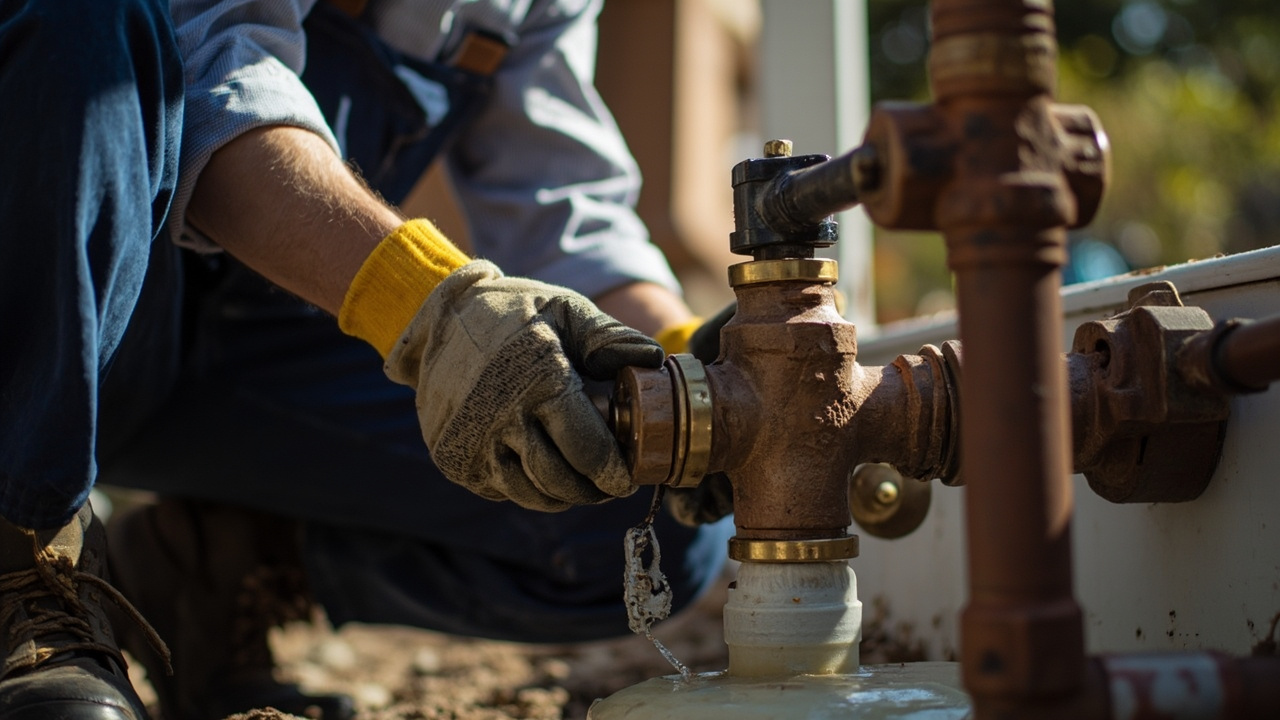
Slab foundation homes, common throughout the metro area, typically have the main valve in one of three spots. Check the front exterior wall near the water heater location. Look for a valve attached to the supply line before it penetrates the foundation. Some builders install a shutoff inside the garage on the supply line. Others place it in a ground-level box near the street, usually within five feet of the water meter.

Pier and beam homes, more common in older Houston neighborhoods like the Heights and Montrose, usually have the valve in the crawl space where the supply line rises through the floor. You may need a flashlight and willingness to get dirty.

The valve itself comes in two types. Gate valves have a round handle that you turn clockwise multiple rotations to close. These older-style valves can seize after years without use. Ball valves have a lever handle that you rotate 90 degrees from parallel to perpendicular with the pipe. This quarter-turn design closes fully and provides clear visual confirmation when the handle sits perpendicular to the pipe, you have shut off water supply to home.

Before an emergency strikes, locate your valve now. Turn it off and back on to confirm it operates smoothly. This simple test reveals problems while you can address them calmly. If the valve leaks, spins without closing, or refuses to budge, call a plumber to replace it. A failing shutoff valve defeats the entire purpose.

Label the valve location clearly. Take photos on your phone. Tell everyone in your household where it sits and how to operate it.

Steps to Properly Shut Off Your Main Water Supply

How to Shut Off Main Water Valve in Houston – Emergency Preparation Guide for Homeowners
01

Locate the Valve

Find your main shutoff valve before you need it. Check the front exterior wall, garage, or ground box near the meter. Look for a valve on the supply line before it enters your foundation. Ball valves have a lever handle. Gate valves have a round wheel. Clear any obstacles blocking access so you can reach it quickly during emergencies.
02

Turn Off the Water

For ball valves, rotate the lever 90 degrees until it sits perpendicular to the pipe. For gate valves, turn the wheel clockwise until it stops, usually five to eight full rotations. Do not force a stuck valve. Apply steady pressure. If it refuses to move, call a plumber immediately. Forcing a seized valve can snap the stem or crack the valve body.
03

Verify Complete Shutoff

After closing the valve, open a faucet at the lowest point in your home to confirm water flow stops. Open another faucet at the highest point to release pressure and allow remaining water to drain from the lines. If water continues flowing after closing the main valve, the valve has failed. Contact Atlas Plumbing Houston immediately for emergency valve replacement.

When to Shut Off Your Main Water Valve

Knowing how to turn off water to the whole house matters most during specific emergency scenarios common to Houston homes.

Burst pipes demand immediate shutoff. When a pipe ruptures, water floods the affected area at full city pressure. Close main water shut off valve first, then address the leak. Even a small pinhole leak in a copper supply line releases gallons per hour. A full pipe separation becomes a geyser.

Fixture failures require shutoff when individual valves fail or do not exist. If your toilet supply line ruptures and the fixture shutoff spins uselessly, close the main valve. Same for water heater failures, washing machine floods, or dishwasher leaks when the appliance valve will not close.

Before extended absences, shut off your main supply. If you leave Houston for more than a few days, closing the valve eliminates risk from slow leaks or sudden failures while you are gone. A small drip becomes a flood over a week. Turn off the main, open faucets to drain pressure, and travel with peace of mind.

Hurricane preparation includes main valve closure in flood-prone areas. When rising water threatens to enter your home, shut off the main supply before evacuating. Floodwater contamination can backflow through fixtures into your supply lines if the valve stays open. Close it to protect your plumbing system.

Winter freeze warnings mean protection time for exposed pipes. Houston sees hard freezes every few years. When temperatures drop below 28 degrees for extended periods, pipes in attics, garages, and exterior walls risk freezing. Close main water shut off valve and open faucets to drain lines in these spaces. This prevents ice expansion that splits copper pipes.

Planned plumbing work always begins with main shutoff. Any repair or replacement on supply lines requires zero water flow. Professional plumbers close the main first for safety and to prevent flooding during the repair.

What You Need to Know About Your Main Water Shutoff System

Valve Maintenance and Testing

Main shutoff valves sit unused for years, then you need them instantly during a crisis. Sediment buildup, mineral deposits, and internal corrosion cause valves to seize. Test your valve twice per year by closing it completely, then reopening it. This exercise breaks up deposits and confirms smooth operation. If the valve drips after reopening, the washer or seal has degraded. Schedule replacement before it fails completely. Gate valves older than 15 years often need replacement due to internal wear. Ball valves last longer but still require periodic testing.

Understanding Valve Types and Replacement

Gate valves control flow with an internal gate that lowers to block water. These valves close slowly through multiple rotations. They work reliably when new but wear over time. The gate can break loose from the stem, leaving you spinning the handle uselessly while water keeps flowing. Ball valves use a rotating ball with a hole through the center. Quarter-turn operation provides fast shutoff and clear visual confirmation of position. When replacing a failing main valve, most plumbers install ball valves for superior reliability. The upgrade costs slightly more but eliminates the slow-close limitations of gate valves.

Secondary Shutoff Options

Your property has multiple water shutoff points. The main valve at your home stops flow from the meter to your house. The meter valve, located in the street box, controls flow from the city supply to your meter. Only water utility workers or licensed plumbers should operate meter valves. Individual fixture shutoffs control flow to specific sinks, toilets, and appliances. Water heaters have dedicated shutoffs on the cold supply line. Knowing all shutoff locations gives you options during different emergency scenarios. When a fixture valve fails, close the main. When the main valve fails, call Atlas Plumbing Houston for emergency meter shutoff and main valve replacement.

After You Close the Main Valve

After shutting off water supply to home, residual water remains in your pipes. Open faucets at high and low points to drain this water and relieve pressure. This step prevents water hammer when you restore service. Leave the faucets open while repairs occur. Before reopening the main valve, close all faucets. Open the main valve slowly, especially with gate valves. Quick opening creates pressure spikes that can damage fixtures or cause leaks at weak connections. Listen for unusual sounds like whistling or banging, which indicate air in the lines or loose pipes. Run each fixture briefly to purge air from the system.

Frequently Asked Questions

You Have Questions,
We Have Answers

How do I turn off the main water valve in my house? +

Locate your main water valve, which is usually near where the water line enters your home. Turn the valve clockwise to shut it off. If you have a gate valve, rotate the wheel until it stops. For ball valves, turn the lever 90 degrees until it's perpendicular to the pipe. You should feel resistance when fully closed. In Houston homes, the valve is often in the garage, utility room, or outside near the foundation. Test the shutoff by opening a faucet. If water stops flowing, you've successfully closed the valve.

Where is my main water shut off valve? +

Your main water shut-off valve is typically where the municipal water line enters your home. In Houston, check inside near the water heater, in the garage, or along an interior wall facing the street. Outside, look near the foundation or in a ground-level access box close to the street. Many Houston homes built on slab foundations have the valve in the garage or a utility closet. If you have a crawl space, check there. The valve sits on the main supply line before it branches to fixtures throughout your house.

Is it safe to turn off the main water valve? +

Yes, turning off the main water valve is safe and recommended during plumbing emergencies or repairs. This prevents water damage and allows safe work on fixtures and pipes. In Houston, shutting off your valve during freezes protects pipes from bursting when temperatures drop. You can turn it off as often as needed for maintenance or extended absences. The valve is designed for regular use. If the valve is old or corroded, exercise it periodically to prevent it from seizing. Regular operation keeps the mechanism functional and ready for emergencies.

Why is water still running when the main valve is turned off? +

Water may continue running if the valve is not fully closed. Turn it further clockwise until you meet firm resistance. Residual water in the pipes will drain out after shutoff, which can take a few minutes. If water keeps flowing steadily, the valve may be broken, corroded, or partially clogged with sediment. In Houston's hard water areas, mineral buildup can prevent complete closure. Check if you have multiple main valves and ensure all are closed. A faulty valve requires replacement. Call a licensed plumber to inspect and replace the defective shutoff valve immediately.

Can you shut off your own water main? +

Yes, you can shut off your own water main at the property line valve or the valve inside your home. The valve inside your house is your responsibility to operate and maintain. The meter valve at the curb or street, owned by the Houston water utility, is technically their property. You can turn it off in an emergency, but you should not tamper with the meter itself. For routine maintenance, use your interior shutoff valve. If you must use the street valve, you may need a water meter key to access the underground box and turn it.

What does a water shut-off valve look like? +

A water shut-off valve appears as either a gate valve or ball valve on your main water line. Gate valves have a round wheel handle you turn multiple rotations to close. Ball valves feature a straight lever handle that you rotate 90 degrees. The valve body is brass, bronze, or plastic, with threaded or soldered connections. In Houston homes, you'll find it on a three-quarter-inch or one-inch diameter pipe. The valve sits inline with the pipe, with an inlet and outlet connection. Look for a handle perpendicular to the pipe when closed.

Do all homes have a main water shut-off valve? +

Yes, all homes have a main water shut-off valve where the municipal supply line enters the structure. Building codes require this shutoff for safety and maintenance. Most Houston homes have two shutoff points: one inside the house you control, and one at the meter near the street that the water utility owns. Older homes may have outdated or corroded valves that need replacement. New construction typically installs accessible, code-compliant valves. If you cannot locate your main valve, trace the water line from your meter toward the house to find the shutoff point.

Where can I find the main water shutoff valve? +

Find your main water shutoff valve by tracing the water line from your meter to where it enters your home. In Houston houses, check the garage wall facing the street, near the water heater, or in a utility closet. For homes on pier and beam foundations, look in the crawl space. Outside, search along the front foundation wall or in a ground-level box near the property line. The valve sits on the main supply pipe before it branches to your plumbing fixtures. If you have trouble locating it, check your home inspection report or contact a plumber.

How can I find where to turn my water off? +

Start by locating your water meter, usually in the front yard near the street or sidewalk. The main line runs from there to your house. Follow this path to find where the pipe enters your foundation. Your shutoff valve is at this entry point or just inside. In Houston, check the garage, utility room, or exterior wall. Look for a pipe with a valve handle near the water heater or along the wall closest to the street. If the valve is underground outside, you'll see a rectangular or round access cover near the foundation.

How long does it take for water to stop after turning off the main valve? +

Water stops flowing within 10 to 30 seconds after you close the main valve completely. The exact time depends on how much residual water remains in your pipes and how far fixtures are from the shutoff point. Upstairs faucets drain faster due to gravity. In Houston homes with long pipe runs, it may take up to a minute for all water to stop. You'll hear gurgling as air enters the system. Open the highest and lowest faucets in your house to speed drainage and relieve pressure in the lines after shutting off the main valve.

Houston Clay Soil and Water Line Stress Make Main Valve Knowledge Critical

Houston sits on expansive clay soil that shrinks during drought and swells with moisture. This seasonal movement creates ongoing stress on underground water supply lines. As clay shifts, pipes bend and joints separate. Older homes with galvanized steel supply lines face the highest risk because these pipes corrode from inside, weakening the walls until soil pressure causes rupture. Even modern PEX and copper lines eventually fail at compression fittings when clay movement becomes extreme during multi-year drought cycles. The 2023 drought caused unprecedented soil contraction across the metro area, triggering supply line failures in neighborhoods from Kingwood to Sugar Land. When soil shifts break an underground line, hundreds of gallons flood your foundation before you notice. Knowing how to shut off main water valve stops the flow immediately, preventing foundation damage and utility bill disasters from unmetered water loss.

Atlas Plumbing Houston trains homeowners on main valve operation during every service call because we understand local emergency patterns. Our technicians work daily with burst pipe emergencies caused by clay soil movement, freeze damage, and aging infrastructure throughout Harris County and surrounding areas. We respond to hundreds of main valve failures each year, often discovering the valve has seized when homeowners needed it most. During winter freeze events, our emergency lines receive back-to-back calls from residents who cannot close corroded gate valves while pipes burst in attics. That pattern drives our recommendation to test your valve twice yearly and upgrade to ball valve systems. We offer free valve location consultations to help Houston families prepare before emergencies strike because prevention costs less than crisis response.
Plumbing Services in The Houston Area

Explore our service area and locate Atlas Plumbing with ease. We’re proudly based in Houston and serve surrounding neighborhoods with fast, local plumbing solutions. Whether you need emergency assistance or routine service, we’re just around the corner. Use the map below to check our coverage area or stop by our office for in-person assistance. Our friendly team is ready to help and answer any questions you may have. Experience prompt, professional plumbing service close to home—reach out or visit today!

Address:
Atlas Plumbing Houston, 2200 Post Oak Blvd, Houston, TX, 77056

Additional Services We Offer

Our news updates

Latest Articles & News from The Blogs

Choosing the Right Professional for Safe Gas Line Repairs Around Pearland Gas leaks in Pearland require fast action and expert…

Who You Should Call for Safe Gas Line Repairs Around Pearland

Choosing the Right Professional for Safe Gas Line Repairs Around Pearland Gas leaks in Pearland require fast action and expert…

Professional Drain Cleaning in Cypress That Clears the Clog for Good

Cypress homeowners often struggle with drains that refuse to stay clear. When you live in neighborhoods like Bridgeland or Fairfield,…

Why Tech Forward Homeowners in Memorial are Swapping to Touchless Kitchen Faucets

Smart Kitchen Upgrades in Memorial Homes for 2026Homeowners in the Memorial area are leading the shift toward smarter more efficient…

Contact Us

Do not wait for an emergency to discover your main shutoff valve has failed. Call Atlas Plumbing Houston at (281) 572-0076 to schedule valve testing or upgrade to a reliable ball valve system. Our technicians respond fast across the Houston metro area.