
How to Manage Backflow Testing Requirements for Your Business in the Medical Center
Medical facilities in the Texas Medical Center operate under the most stringent water safety regulations in the state. As we progress through the 2026 calendar year, Houston Public Works has updated the compliance frameworks to protect the municipal water supply from contamination. This area holds a high density of clinical laboratories and surgical centers where cross connections pose significant health risks. Every commercial entity near Fannin Street and Holcombe Boulevard must maintain rigorous backflow prevention protocols to ensure patient safety and operational continuity. Protecting the water supply in a dense urban environment requires constant vigilance and professional expertise.
Backflow occurs when water flows in the opposite direction of its intended path. This reversal pulls hazardous substances into the clean drinking water system. In a high pressure environment like the Medical Center, the risk often stems from backsiphonage or backpressure. Backsiphonage happens when a drop in city water pressure creates a vacuum. This can happen during a water main break or when fire hydrants are in heavy use near the property. Backpressure occurs when a facility pumps water at a higher pressure than the municipal supply. This is common in high rise medical buildings with booster pumps. Both scenarios allow non potable water to enter the public lines without a functioning backflow prevention assembly. You can learn more about our commercial plumbing services in Houston to understand how we manage these high pressure systems.
The Houston Public Works Digital Compliance Portal for 2026
Houston Public Works transitioned all backflow reporting to a mandatory digital portal to streamline tracking across the city. For the current 2026 reporting cycle, business owners must ensure their registered testers submit results through this online system. This shift removes paper waste and provides real time updates on your compliance status. The city requires these digital records to maintain an accurate database of every hazard level across the Inner Loop. Using this portal is a requirement for all commercial properties within the city limits.
Managing these reports involves specific administrative costs that facility managers should include in their annual budgets. The 2026 digital submission fee for each Test and Maintenance Report is thirty five dollars. There is also an administrative processing surcharge of twelve dollars and fifty cents per device. If a business fails to submit a passing report before the annual deadline, the city applies a late filing penalty of one hundred and fifty dollars. These costs cover the maintenance of the digital infrastructure and the enforcement of the Cross Connection Control Program. For organizations managing multiple buildings in the Medical Center, these fees can accumulate quickly. We help our clients navigate these backflow testing requirements in Houston to avoid unnecessary fines.
Specific Clinical Equipment Requiring Backflow Protection
The Medical Center uses specialized equipment that presents unique hazards to the water system. Clinical tools often connect directly to water lines for cooling or cleaning purposes. Each of these connections requires a specific type of protection based on the level of toxicity involved. Inspectors in 2026 look closely at these connections during annual audits.
Steam sterilizers and autoclaves are essential in any surgical or dental setting. These machines use water for the cooling jackets and steam generation. Without a backflow preventer, the chemicals used to treat the boiler water or the contaminants from the sterilization chamber could migrate into the building pipes. Most Houston inspectors require a Reduced Pressure Zone assembly for these high hazard connections. This assembly provides the highest level of protection by using a relief valve that opens if the internal check valves fail.
Hemodialysis water treatment systems represent another critical area of concern. These units require ultra pure water and have zero tolerance for contamination. The complex piping involved in dialysis stations creates numerous opportunities for backflow. Technicians must install backflow assemblies to protect the patient treatment areas from the building plumbing and the city water from the dialysis waste. This double layer of protection ensures that even a massive pressure drop in the city main does not compromise patient safety. You can find more information about our specialized medical plumbing services for these sensitive environments.
Laboratory glassware washers and dental vacuum systems also fall into the high hazard category. Glassware washers often use caustic detergents and acidic rinses that are dangerous if ingested. Dental vacuum systems handle biological waste and water simultaneously. A failure in backflow prevention here could lead to biological pathogens entering the local water grid. Other common equipment in the Medical Center requiring protection includes mortuary preparation tables and large scale cooling towers used for MRI suites. These systems often require specialized filtration and backflow prevention to meet the current standards.
Understanding Houston Plumbing Codes and Local Amendments
Houston follows the current Uniform Plumbing Code and includes several local amendments that facility managers must understand. These amendments specifically address the unique environmental conditions in Southeast Texas. The City of Houston Building Code provides the legal framework for how and where you must install backflow devices. Staying current with these codes is essential for any business operating in the 2026 landscape.
One primary amendment involves the installation height of Reduced Pressure Zone assemblies. The code requires these devices to be installed between twelve and sixty inches above the finished floor. This range ensures that testers have safe access to the device and that the relief valve can drain properly without being submerged during a heavy rain event. In the Medical Center, where basement mechanical rooms are common, this height requirement is vital for preventing the device from becoming a source of contamination itself during a flood. Proper drainage away from the assembly is also a mandatory requirement in the current code.
The city also differentiates between high hazard and low hazard connections more strictly than the base Uniform Plumbing Code. Almost all medical applications are classified as high hazard. This classification mandates the use of a Reduced Pressure Zone assembly rather than a simpler double check valve. While a double check valve might suffice for a standard office building fire line, the presence of clinical chemicals in a medical facility upgrades the entire property requirement. Understanding these distinctions saves time and money during the installation phase.
Technical Mechanics of the Annual Backflow Test
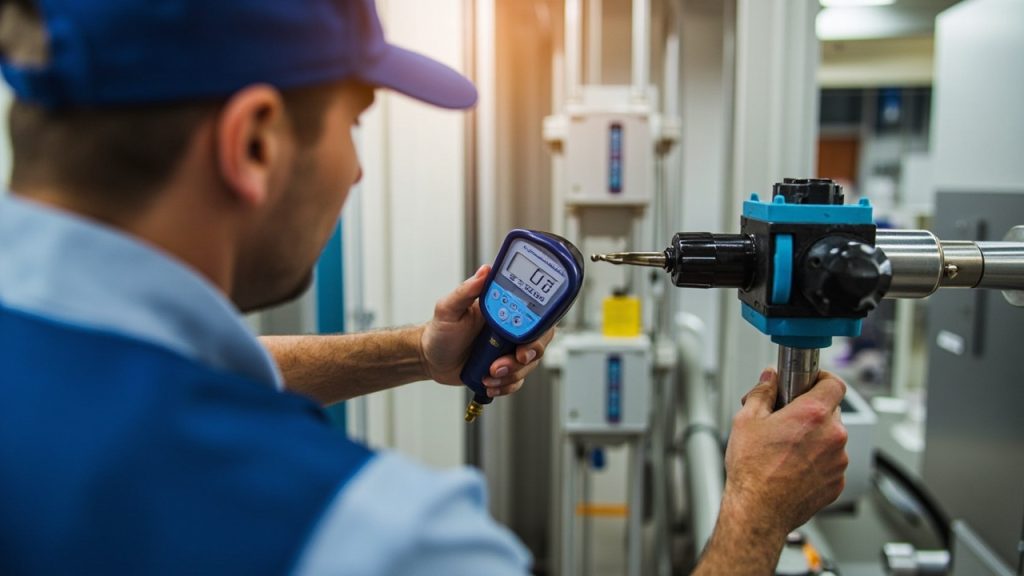
The testing process in 2026 involves a sequence of steps performed by a licensed Backflow Prevention Assembly Tester. The tester uses a calibrated gauge to check the internal components of the assembly. They connect this gauge to the four test cocks located on the side of the device. Each test cock allows the technician to isolate specific check valves and relief valves to ensure they are holding pressure. This process is highly technical and requires a deep understanding of fluid dynamics.
The first check valve must hold at least five pounds per square inch of pressure. The second check valve must hold at least one pound per square inch. Most importantly, the relief valve must open before the pressure differential drops below two pounds per square inch. If any of these components fail to meet these specific metrics, the device is non compliant and requires immediate repair. Testers in 2026 often carry replacement kits for common brands like Watts or Wilkins to fix these issues on the spot. Maintaining a stock of these parts is a common practice for experienced technicians.
Comparison of 2026 Backflow Assembly Requirements
The following table outlines the common types of backflow assemblies used in Houston medical facilities during the 2026 year.
| Assembly Type | Hazard Level Classification | Common Medical Center Application | 2026 Inspection Frequency |
|---|---|---|---|
| Reduced Pressure Zone | High Hazard | Surgical Centers and Clinical Labs | Annual Mandatory |
| Double Check Valve | Low Hazard | Fire Sprinklers and Irrigation | Annual Mandatory |
| Pressure Vacuum Breaker | High Hazard Siphonage | Outdoor Landscape Systems | Annual Mandatory |
| Spill Resistant Vacuum Breaker | High Hazard Indoor | Specific Laboratory Fume Hoods | Annual Mandatory |
Environmental Factors Affecting Backflow Devices in Houston
The local climate in Houston plays a significant role in the lifespan of your plumbing infrastructure. High humidity levels lead to rapid oxidation of brass and copper components. This corrosion can cause test cocks to seize or internal springs to lose their tension. When a spring fails, the check valve cannot close tightly, leading to a failed test. Regular maintenance helps mitigate these effects and extends the life of the assembly.
Houston soil composition also impacts water quality. The heavy clay in the area often shifts, causing underground water main breaks. When the city repairs these mains, silt and sand enter the system. This debris travels through the lines and gets caught in the rubber seals of your backflow preventer. Even a tiny grain of sand can prevent a check valve from sealing properly. Facility managers near the Medical Center should consider installing strainers before their backflow assemblies to catch this debris and extend the life of the device. This is a common recommendation for facilities located near Brays Bayou or other areas with high soil movement.
The threat of hurricane season in the 2026 year also adds complexity to backflow management. High winds can damage outdoor assemblies, and flooding can submerge devices that are not installed at the correct height. Ensuring that your backflow prevention system is protected from the elements is a critical part of a comprehensive facility management plan. Our team provides emergency plumbing support in Houston for facilities that experience system failures during storm events.
Compliance Timelines and Business Continuity
Maintaining a regular schedule for backflow testing prevents emergency shutoffs. Houston Public Works usually issues a notice sixty days before your certification expires. We recommend scheduling your test forty five days in advance. This window provides enough time to order specialized parts if your assembly fails the initial inspection. Many medical grade devices require specific replacement modules that might not be in stock at every local supply house.
Testing requires the water to be shut off for roughly thirty minutes. For hospitals and clinics, this requires strategic planning. Most professional teams offer after hours or weekend testing to avoid interrupting patient care. We coordinate with your facility staff to ensure that cooling systems and critical medical equipment remain stable during the brief outage. A proactive approach protects your facility from the sudden loss of water service which would lead to a total operational shutdown. Consistent communication between the tester and the facility manager ensures a smooth process.
Typical 2026 Service Schedule for Medical Facilities
The following table shows the typical phases of a backflow inspection for a facility in the Medical Center.
| Phase of Service | Time Required | Operational Impact |
|---|---|---|
| Physical Site Inspection | Twenty Minutes | None |
| Pressure Gauge Testing | Thirty Minutes | Water Interruption Required |
| Minor Seal Replacement | One Hour | Water Interruption Required |
| Digital Report Submission | Fifteen Minutes | None |
Consequences of Non Compliance in the Texas Medical Center
The City of Houston takes water safety seriously and has increased enforcement for the 2026 year. Failing to provide a passing Test and Maintenance Report results in several stages of penalties. The first stage is a formal warning notice. If the business does not respond within fifteen days, the city issues a municipal court citation. These citations carry significant fines that increase for every day the device remains untested. Legal compliance is a mandatory aspect of doing business in Houston.
The final stage of enforcement is the termination of water service. For a medical business, this is a catastrophic scenario. You cannot operate a surgical center or a laboratory without a reliable supply of potable water. Regaining water service after a shutoff involves paying all outstanding fines, completing the backflow test, and paying a reconnection fee to the city. Working with a specialist who understands the 2026 Houston plumbing codes ensures you never reach this stage of enforcement. We prioritize compliance to protect our clients from these operational risks.
Record Keeping for Medical Facility Audits
Beyond city compliance, medical facilities must answer to health department inspectors and accreditation bodies. These organizations often ask to see proof of backflow testing as part of their safety audits. Keeping a dedicated digital folder with your 2026 Test and Maintenance Reports is a best practice for any property manager. This documentation proves that you are taking the necessary steps to prevent cross contamination within your building. Organized records simplify the audit process and demonstrate professional management.
Your tester should provide you with a copy of the report immediately after the test. We also recommend keeping a physical tag on each device that shows the date of the last test and the name of the licensed tester. This tag provides a quick visual reference for any inspector walking through the mechanical room. It demonstrates a high level of professional management and attention to detail which is expected in the Medical Center environment. These small steps contribute to a safer facility and a more efficient inspection process.
Work with a Professional Houston Backflow Specialist
Managing the water safety requirements for a complex medical facility is a full time responsibility. You need a partner who knows the difference between a standard commercial setup and a high stakes clinical environment. Our team has years of experience working with the specific needs of businesses in the Texas Medical Center. We understand the administrative nuances of the 2026 Houston Public Works portal and the technical requirements of the current city codes.
We provide comprehensive testing, repair, and certification services. We handle the digital filings and the coordination with city officials so you can focus on your patients and your business operations. Our technicians are fully licensed and registered with the City of Houston to perform backflow testing on all types of assemblies. Contact us today to schedule your annual inspection and ensure your facility remains compliant with all 2026 water safety mandates. Protecting the Houston water supply starts with professional testing at the building level.